Guides · Stuart, Florida
Why Stuart Is Where It Is
A town does not choose its location; the location chooses the town. Stuart’s address was settled by a railway and a river, and everything else followed.
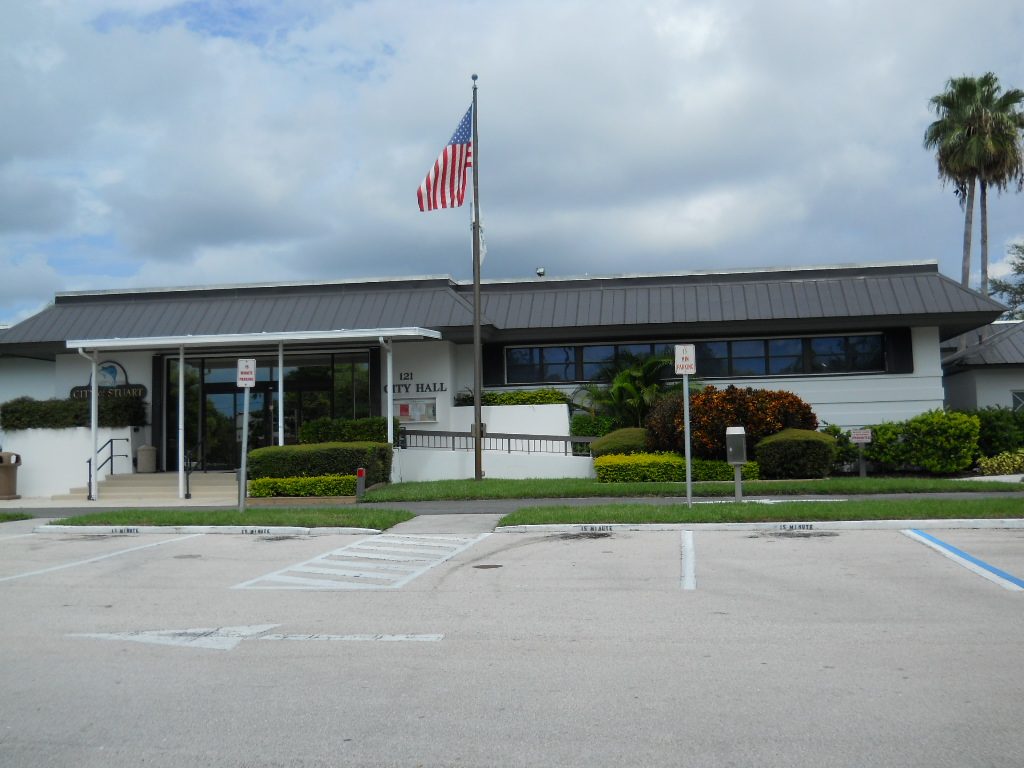
The Name on the Map
Before it was Stuart, it was Potsdam. That name lasted two years, from 1893 to 1895, before the town was renamed for Homer Hine Stuart Jr., a local landowner holding 160 acres around the railway station. The renaming was not a civic rebrand; it was a recognition of who held the ground the trains stopped on.
The Florida East Coast Railway arrived between 1892 and 1896. That is the first fact of Stuart’s existence. Without the rail, the settlement at this particular bend of the St. Lucie River might have stayed a landing for fishermen and a few hardy citrus families. The rail made it a town. The water made it a place people wanted to stay.
Incorporation came in 1914, and the charter as a city arrived in 1925, the same year Martin County was carved out of Palm Beach County and Stuart was named its seat. The county seat designation is not glamorous, but it is permanent. It put government offices downtown, which put jobs downtown, which put people downtown. The Lyric Theatre, standing in the historic downtown, is a direct result of that civic gravity. A town with a courthouse and a theater is not a whistle-stop anymore.
Water as Infrastructure
The railway brought people and freight. The water brought identity. Stuart sits where the St. Lucie River meets the Indian River Lagoon, and the Atlantic Ocean is close enough that the town’s eastern edge is effectively a threshold to open water. That is not scenery; that is function.
That meeting point is why Stuart formally adopted the slogan Sailfish Capital of the World in 1957. The sailfish did not choose Stuart because of a marketing campaign. They chose the water because the water is rich, and the water is rich because the lagoon and the river and the sea all mix here. The slogan was a statement of fact, not aspiration.
The current population is 18,058 people. The median age is 53.1 years. That demographic skew is not an accident. This is a town people move to after they have done their working lives elsewhere, and it is a town people return to. The water is the draw, but the water is also the anchor. You do not relocate to Stuart for the commute; you relocate for the launch ramp.
The Housing Picture
The census numbers tell a story of a town that is full in a particular way. There are 10,360 total housing units. Of those, 1,297 units are held for seasonal or recreational use. That is roughly one in eight homes. Meanwhile, 2,165 units are vacant. Add those together, and nearly a third of the housing stock is not occupied year-round by permanent residents.
That is the classic profile of a coastal town with a second-home market. It is not a criticism; it is a condition. The median home value is $291,300, and the median gross rent is $1,540. The median household income is $64,409. The arithmetic is tight. A household earning the median income can buy the median home only with a substantial down payment, and renting at $1,540 a month consumes a large share of that income.
The unemployment rate is 5.1 percent. That is not booming, but it is not distressed. The town does not have a single-industry dependency. It has government, healthcare, marine services, and a tourism sector tied to the water. That mix keeps the economy stable even when the weather turns.
Who Lives Here Now
The education numbers are worth noting: 35.8 percent of residents hold a bachelor’s degree or higher. That is above the national average. It reflects a town that has attracted professionals and retirees who bring their skills and their pensions with them. It does not reflect a tech hub or a research corridor; Stuart does not pretend to be that.
What Stuart is, is a town that gets what it is. The downtown is small and walkable. The Lyric Theatre anchors one end of the historic core. The riverfront anchors the other. The railway that built the town still runs through it, though it no longer defines it. The cars and the bridges have done that job for decades.
The median age of 53.1 years tells you that this is not a town of young families scrambling for school districts. It is a town of people who have already made their choices. They chose Stuart because they could afford a house with a dock, or because they wanted a county seat with a hospital, or because they remembered the water from childhood visits and came back.
The Arrangement Holds
Stuart is not a secret. It has been praised in national magazines and ranked in coastal lists for years. We do not need to add to that chorus. What we can say is that the town’s location is not luck and not coincidence. The railway chose the spot because the river crossing was practical. The county chose the spot because the railway had already made it central. The fishermen chose the spot because the water delivered.
The census confirms the stability. The population is large enough to support a real downtown, small enough to avoid sprawl. The seasonal units are a fact of life, not a flaw. The vacant units are the market breathing.
Stuart is where it is because a man named Stuart held land near a train stop, and because three bodies of water meet within the town’s limits. Everything else—the slogan, the theater, the county seat, the 53-year-old median—is just what happened after. The location was fixed early. The town has spent the last century living up to it.
Every business named above is one we hold a listing for, and every date traces to a source on our sources page. We do not describe menus, interiors or service we have not verified. Details change — confirm before you travel.