Guides · Stuart, Florida
The History of Stuart in 6 Landmarks
Stuart’s long arc is written in its streets, its riverfront, and the stubborn fact that it remains a working town rather than a postcard. Here are six places to read that history for yourself.
The St. Lucie River at the Downtown Waterfront
The river is the reason any of this exists. Before there was a Stuart, there was a crossing, a harbor, and a stubborn strip of land where the St. Lucie meets the Atlantic via the lagoon. The downtown waterfront is still the town’s spine. Stand on the seawall and you are looking at the original argument for settlement: deep water, protected anchorage, and a route to the ocean.
The boats change. The water does not. The river has been a working highway, a playground, and, at times, a contested political issue. But it remains the one landmark that predates every other. In a town that measures its age in decades, not centuries, the river is the closest thing to permanence.
The Old Stuart High School Building
Not every landmark needs a plaque. The old high school building, sitting in the blocks near the center of town, is a brick-and-mortar reminder that Stuart was once a small agricultural and fishing town with a growing population of families. The structure is civic architecture from an era when public buildings were meant to look like they cost something.
Today it houses offices and community uses, but its scale tells the real story. This was a school for a town that believed it was going to keep growing. The fact that it still stands, repurposed rather than demolished, says something about Stuart’s habit of keeping its past in service rather than under glass.
The Stuart Boat Show Grounds on NW Dixie Highway
The boat show has been a January ritual for more than fifty years. The 2027 edition is the 53rd, and the Southeast Tourism Society has named it one of the Top 20 Events in the Southeast. That longevity is not nostalgia. It is evidence.
The show grounds on NW Dixie Highway are the physical marker of Stuart’s modern identity: a town that makes its living from the water without pretending to be a resort. For three days each January, the parking lots and tents fill with hulls, hardware, and people who came to buy, not just browse. The event has outlived every marina trend and economic cycle since the early 1970s. That is a landmark with a calendar attached.
The Historic Downtown Commercial District
The blocks around Flagler Avenue and the river are the town’s original commercial heart, and they remain recognizable as such. The building stock is modest: two-story storefronts, awnings, and sidewalks that assume pedestrians will actually use them. This is not a restored theme village. It is a downtown that kept functioning.
Stuart’s downtown has survived the usual Florida plot twists—a highway era, a strip-mall era, a big-box era—by staying useful. The shops change tenants, but the bones hold. Walk it on a weekday morning and you will see what a small-town commercial district looks like when it never fully emptied out.
The Railroad Right-of-Way and the FEC Corridor
The Florida East Coast Railway line runs through town, and its presence is easy to take for granted. But the railroad is the reason Stuart is where it is. Henry Flagler’s tracks pushed down the coast in the late 1800s, and the crossing at the St. Lucie River made this spot a natural stop. The trains brought goods, passengers, and the mail.
Today, the tracks still cut through town, and their crossings still stop traffic. That is the point. The railroad did not become a museum piece. It remained a working line, and the town grew around it in a way that is visible in the street grid and the industrial lots near the water. A landmark does not have to be beautiful. It just has to still be doing the job.
The Riverfront Neighborhoods Between the Bridges
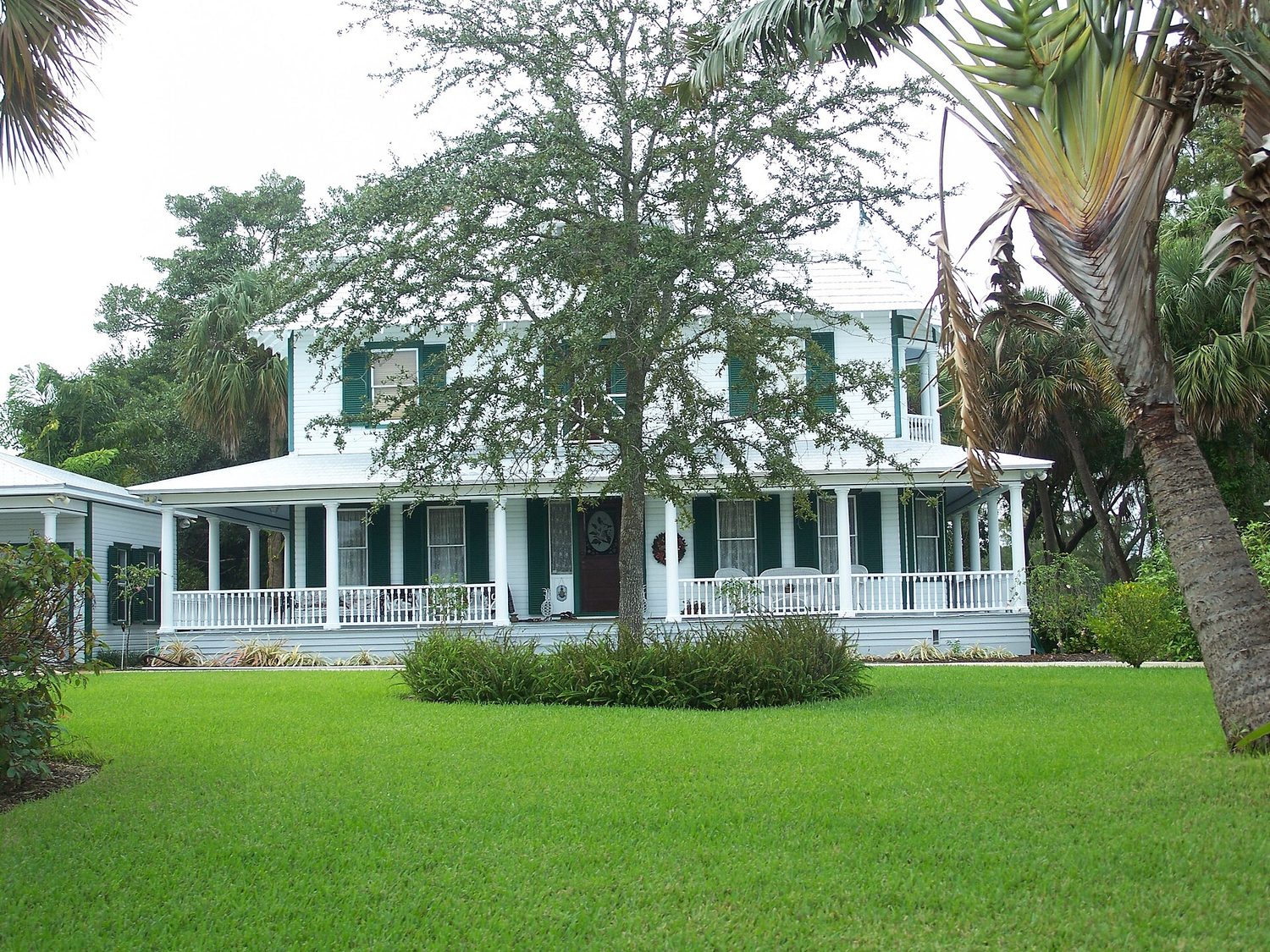
The houses between the Roosevelt Bridge and the old Evans Crary Bridge tell the town’s social history better than any marker could. These are working waterfront neighborhoods: modest bungalows, boat lifts, and docks that are functional rather than ornamental. The mix of housing stock reflects a town that was never exclusively wealthy and never exclusively poor.
Here, the census numbers make sense. Stuart’s median age is 53.1 years, and its median home value is $291,300. Of the town’s 10,360 housing units, 2,165 sit vacant, and 1,297 are held for seasonal or recreational use. That is not a ghost town. That is a town where a substantial share of the housing stock is second homes, yet the year-round neighborhoods still hold their own. The riverfront blocks between the bridges are where that balance is easiest to see.
Reading Stuart Forward
A town’s history is not a single monument. It is a series of arguments between the past and the present, each one visible in the built environment. Stuart’s six landmarks—the river, the old school, the boat show grounds, the downtown, the railroad, and the riverfront neighborhoods—are not a complete list. They are a starting point.
The population stands at 18,058 people. The unemployment rate is 5.1 percent. The median household income is $64,409, and 35.8 percent of residents hold a bachelor’s degree or higher. These are not dramatic numbers. They are steady numbers, the kind that describe a town that has been here for a while and plans to stay.
Stuart does not need to invent a heritage. It has a river, a railroad, a working downtown, and a boat show that has outlasted five decades of Florida change. That is enough. Walk the waterfront, cross the tracks, and look at the houses near the bridges. The history is not hidden. It is just still in use.
Every business named above is one we hold a listing for, and every date traces to a source on our sources page. We do not describe menus, interiors or service we have not verified. Details change — confirm before you travel.